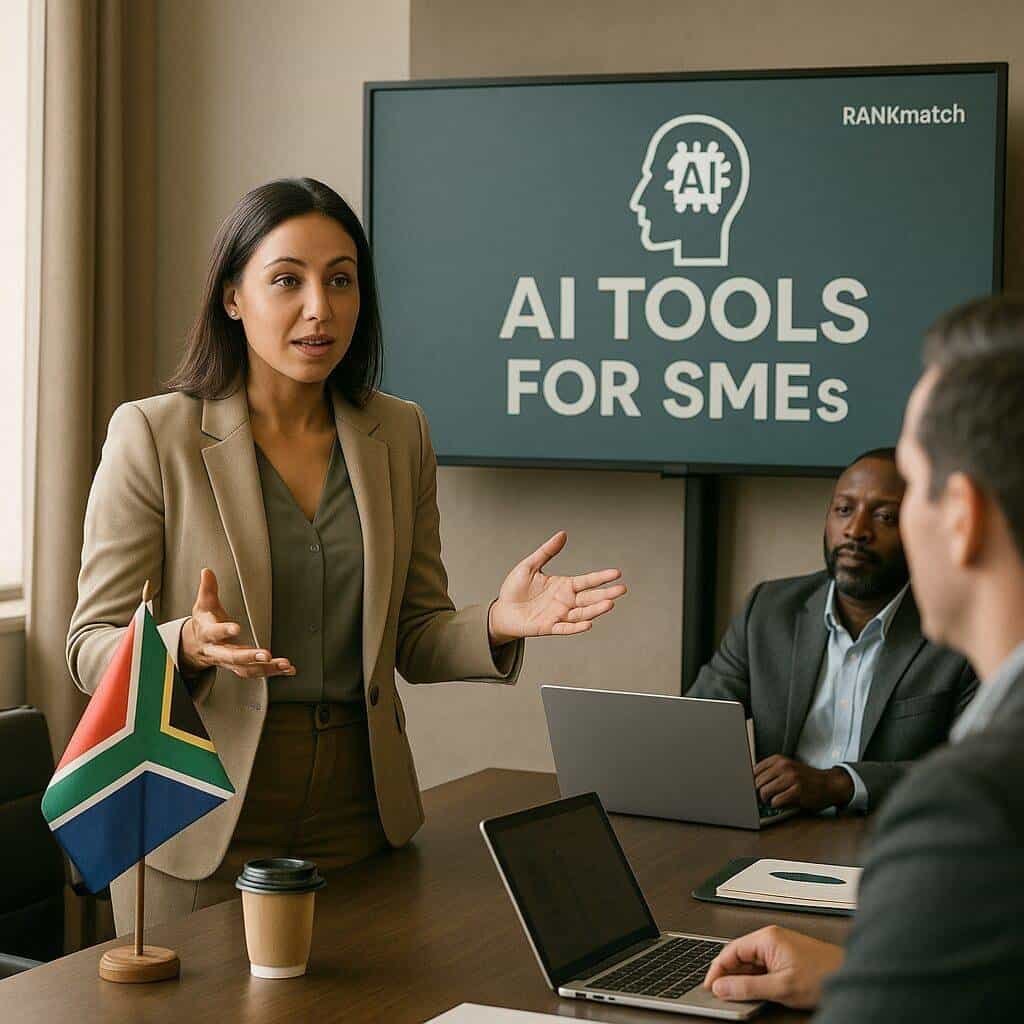
AI Tools for SMEs: Strategies for South African Small Businesses
AI Tools for SMEs are rapidly transforming how small businesses in South Africa compete, operate, and grow. Whether you’re a township entrepreneur, a Cape Town tech start-up, or a family-run Gauteng retail store, leveraging artificial intelligence can help you optimise your operations, stay compliant, and boost profitability. The best part? You don’t need a huge budget to get started. In this article, we’ll break down practical, step-by-step strategies using real AI tools that work for South African SMEs. You’ll leave with actionable insights you can implement today—in ways that make sense for your business and market context.
Why This Matters
South African SMMEs (Small, Medium and Micro Enterprises) play a vital role in the economy, contributing over 40% to GDP and employing an estimated 60% of the workforce. Yet many struggle due to limited resources, compliance demands, and fierce competition. Artificial Intelligence (AI) offers powerful tools that were once only available to large corporations—but are now accessible and affordable to smaller businesses.
Some immediate challenges SMEs face include:
- Inefficiencies in everyday operations (e.g. admin, customer support)
- Difficulties in digital marketing due to lack of know-how or high costs
- Compliance burdens like POPIA and SARS submissions
- Scaling without increasing overheads
AI can be a solution to all of these. And because of the uniquely layered South African market—diverse languages, limited digital literacy in some sectors, and the need for mobile-first solutions—AI can be a game-changer when applied strategically.
According to WhyOptimize, AI-driven automation and data analytics are rapidly becoming key tools to hyper-target customers and reduce marketing costs. South African SMEs that jump in now stand to gain significant first-mover advantages.
Step-by-Step Guide to Using AI Tools for SME Growth
Here’s a clear action plan for integrating AI into your South African SME—without needing a tech team or big budget. Start with one or two tools that solve a real business problem, and scale up as you see results.
1. Automate Basic Admin and Customer Support
Use AI chatbots like Tidio or Chatfuel for WhatsApp and website inquiries. These tools handle repetitive questions such as store hours or product availability—freeing up your time.
Many offer free plans ideal for startups and integrate easily with Facebook, Messenger and Shopify—all common in SA start-ups.
2. Enhance Marketing with AI-Powered Tools
Use platforms like Copy.ai or Jasper.ai to generate persuasive copy for emails, product descriptions or Facebook ads.
To target local SEO, tools like Ubersuggest help identify what potential customers are already searching for. Learn more from BDC’s guide on SEO for small businesses.
3. Optimise Finances and Stay Compliant
Software like QuickBooks South Africa and Xero ZA use AI to auto-categorise expenses, send reminders about SARS deadlines, and automatically reconcile your bank transactions. This cuts down on costly accountant fees during tax season.
4. Personalise Customer Experiences
AI tools like Zoho Analytics help you track customer preferences and segment them into meaningful groups. This allows you to send relevant product offers or reminders at the right time—boosting engagement and conversions without extra spend.
5. Forecast Growth and Inventory Smartly
Tools like Futrli or Zoho Inventory help forecast stock demand so you don’t over-order or run out. Perfect for retail or manufacturing SMEs that rely on tight margins.
Also explore free internal guides like: SME Funding Insights: 5 Government Grants Available by 2025.
Real-World Example: Township Fashion Label Goes Digital
“Mzansi Urban,” a small fashion business based in Soweto, used AI in two major ways:
- Used Copy.ai to write product names and social media captions, saving hours a week
- Adopted Xero to manage invoices, sales reports and inventory without hiring a bookkeeper
Result? They scaled from informal markets to a Shopify e-commerce site reaching customers in Joburg, Cape Town and Windhoek—all within 6 months.
Founder Lungi said: “I’m not a techie, but these tools made running a smarter business possible—even with limited data costs and no big staff.”
Tools, Resources and Next Steps
- Copy.ai – Copywriting automation
- Xero South Africa – Accounting and compliance
- Ubersuggest – Keyword and competitor research for free
- WhyOptimize – SEO and marketing tips
Next Steps:
- Identify one pain point in your business (e.g. admin, marketing)
- Pick an AI tool that solves it based on this article
- Trial it for 7-14 days and measure the impact
- Scale usage as ROI becomes clear
Start small. Focus on transformation where it counts most first.
Conclusion
AI Tools for SMEs are no longer just for tech giants—they are affordable, easy to implement and bring measurable impact for South African small businesses. From automating admin to power-packing your marketing, the shift to AI can unlock time and profits. Focus on practical implementation—one tool, one step at a time.
The sooner your SME leverages AI, the more competitive your brand becomes in a rapidly digitising marketplace.
“`